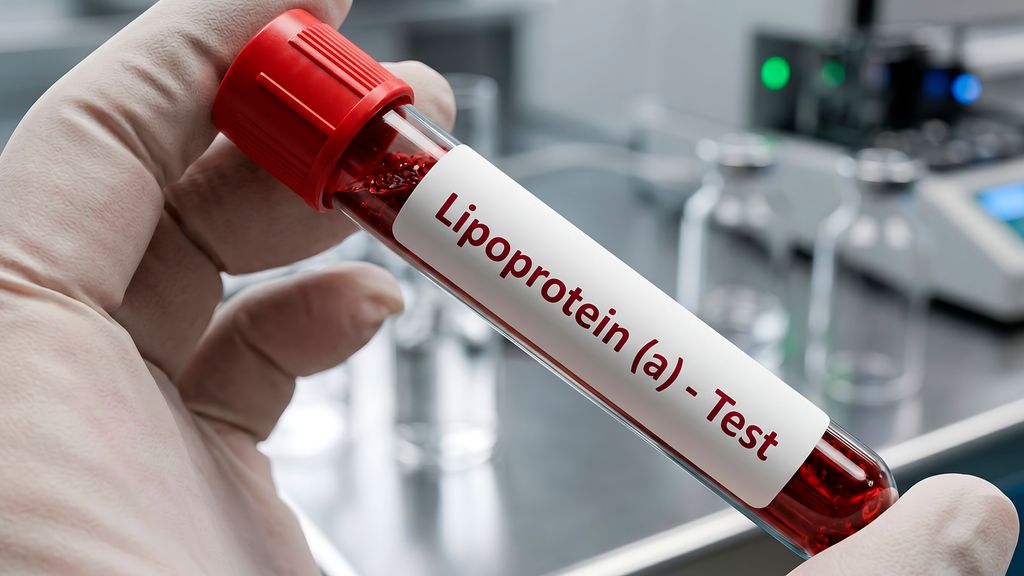
Lipoprotein(a): What every clinician needs to know
Sie sind bereits registriert?
Loggen Sie sich mit Ihrem Universimed-Benutzerkonto ein:
Sie sind noch nicht registriert?
Registrieren Sie sich jetzt kostenlos auf universimed.com und erhalten Sie Zugang zu allen Artikeln, bewerten Sie Inhalte und speichern Sie interessante Beiträge in Ihrem persönlichen Bereich
zum späteren Lesen. Ihre Registrierung ist für alle Unversimed-Portale gültig. (inkl. allgemeineplus.at & med-Diplom.at)
Lipoprotein(a) [Lp(a)] is an LDL-like particle with proatherogenic, proinflammatory, prothrombotic, and procalcific properties. Approximately 20% of the population have elevated Lp(a), which is now recognized as an independent risk factor for atherosclerotic cardiovascular disease, aortic valve stenosis, and chronic kidney disease. Despite its clinical relevance, awareness of Lp(a), its interpretation, and its management remain limited. This review summarizes the biology of Lp(a), its clinical implications, indications for testing, and current and emerging therapeutic strategies.
Keypoints
-
Lipoprotein(a) [Lp(a)] is an LDL-like particle, and an independent, genetically determined risk factor for atherosclerotic cardiovascular disease (ASCVD).
-
Lp(a) concentrations are largely stable throughout adulthood, supporting at least one lifetime measurement in all adults.
-
Currently available therapies, including PCSK9 inhibitors and lipoprotein apheresis, reduce Lp(a) only modestly; in selected countries, apheresis remains the only approved treatment specifically for Lp(a) lowering.
-
Novel Lp(a)-targeted therapies, including small interfering RNA (siRNA), antisense oligonucleotides (ASO), and small molecules, achieve profound Lp(a) reductions of approximately 80–100% in early-phase trials. Phase 3 cardiovascular outcome trials are ongoing.
What is Lp(a)?
Lp(a) is a specialized lipoprotein consisting of a single apolipoprotein(a) [Apo(a)]molecule covalently linked via a disulfide bond to the apolipoprotein B-100 (ApoB-100)component of an LDL-like particle. It is synthesized in the liver and is present only in humans, Old World monkeys, apes, and the European hedgehog, limiting the availability of suitable animal models.1,2
Plasma Lp(a) concentrations are predominantly genetically determined (>90%) and are regulated mainly by the LPA gene on chromosome 6. This gene encodes Apo(a), a protein characterized by an inactive protease-like domain and loop-shaped structures known as kringles.3,4 The LPA gene evolved from the PLG gene, which encodes plasminogen. However, Apo(a) differs both structurally and functionally from plasminogen: it contains ten distinct kringle IV subtypes (KIV1 to KIV10) and an inactive protease domain. Importantly, the kringle IV type 2 domain (KIV2) has a highly variable number of repeats, resulting in more than 40 Apo(a) isoforms of different sizes.
There is an inverse relationship between Apo(a) isoform size and plasma Lp(a) concentration, whereby smaller Apo(a) isoforms are synthesized and secreted more efficiently, resulting in higher circulating Lp(a) levels.3,5 Notably, most individuals (>80%) inherit two Apo(a) isoforms of different sizes, one from each parent, with the smaller isoform typically exerting the dominant influence on plasma Lp(a) concentration.5 However, Apo(a) isoform size explains only part of the variability in Lp(a), with additional contributions from LPA single-nucleotide polymorphisms (SNPs) and other genetic determinants.3
Figure 1 illustrates the structural characteristics of Lp(a) and its unique Apo(a) component.
%20structure.jpg)
Fig. 1: Lipoprotein(a) structure
Who should be tested?
Because Lp(a) levels are predominantly genetically determined and remain relatively stable throughout adulthood, they are minimally influenced by lifestyle interventions such as diet, physical activity, or weight reduction. This has two important clinical implications. First, in most adults, a single lifetime measurement is sufficient to assess Lp(a)-associated risk. Accordingly, contemporary North American and European recommendations support measuring Lp(a) at least once in all adults, ideally as part of the initial lipid assessment. In contrast, testing in children and adolescents should be more targeted and testing may be considered in the setting of ischemic stroke, familial hypercholesterolemia (FH), or a parental history of premature atherosclerotic cardiovascular disease (ASCVD), particularly when no additional risk factors are present. Furthermore, while a single measurement is generally sufficient in adults, repeat testing may be reasonable in youth because Lp(a) concentrations may increase during the transition into adulthood.
Second, the strong heritability of Lp(a) supports cascade screening. Systematic or opportunistic family screening is particularly relevant in patients with FH, markedly elevated Lp(a), or a personal or family history of premature ASCVD, allowing early identification of high-risk relatives.6,7
Notably, although Lp(a) is primarily genetically determined, secondary changes may occur in chronic kidney disease, liver disease, menopause, thyroid disorders, pregnancy, acute infection, and with certain medications. These factors should be considered when interpreting unexpectedly elevated or changing Lp(a) values.6,7
When is Lp(a) high and why does it matter?
The relationship between Lp(a) concentration and ASCVD risk is continuous, with no single universal threshold. For clinical practice, the European Atherosclerosis Society proposes values <75nmol/L (<30mg/dL) as unlikely to indicate clinically relevant elevation, whereas values >125nmol/L (>50mg/dL) are considered associated with increased cardiovascular risk. Intermediate values (75–125nmol/L or 30–50mg/dL) should be interpreted in the context of the patient’s overall ASCVD risk profile.6
The clinical relevance of elevated Lp(a) is well established. Mendelian randomization studies, prospective cohort studies, and meta-analyses consistently identify elevated Lp(a) as an independent risk factor for myocardial infarction, aortic valve stenosis, ischemic stroke, heart failure, and peripheral artery disease (PAD).8 The magnitude of risk differs between disease entities and appears particularly pronounced for myocardial infarction and calcific aortic valve stenosis.1
The pathogenicity of Lp(a) is mediated through multiple complementary mechanisms. While Lp(a) retains the atherogenic properties of LDL particles, its cardiovascular risk is substantially amplified by the Apo(a) moiety and the oxidized phospholipids (OxPL) predominantly carried on the KIV10 domain of Apo(a).2 These OxPL promote vascular inflammation, endothelial dysfunction, calcification, and thrombosis, thereby contributing to disease progression.4,5 The combined proatherogenic, proinflammatory, procalcific, and prothrombotic effects of Lp(a) contribute to its association with a broad spectrum of cardiovascular diseases (Fig. 2).
.jpg)
Fig. 2: Pathogenic mechanisms of lipoprotein(a)
Lp(a) as a risk enhancer
Both European and North American guidelines recognize elevated Lp(a) as a cardiovascular risk enhancer that can refine the estimation of ASCVD risk. Elevated Lp(a) increases cardiovascular risk across all baseline risk categories; however, the absolute risk increase is greatest in individuals with higher baseline risk.6
Current management, therefore, focuses on intensifying global cardiovascular risk reduction, especially aggressive LDL-cholesterol lowering. Treatment intensity should be individualized according to both baseline ASCVD risk and the degree of Lp(a) elevation. Although this approach does not directly lower Lp(a), it reduces absolute ASCVD risk and may partially mitigate the clinical impact of elevated Lp(a). Nevertheless, in patients whose residual risk is driven predominantly by markedly elevated Lp(a), conventional risk factor modification alone may be insufficient, underscoring the need for specific Lp(a)-lowering therapies.
Management and emerging therapies
Mendelian randomization studies suggest that clinically meaningful ASCVD risk reduction may require substantial absolute reductions in Lp(a), often exceeding 50–100mg/dL.6 However, currently available treatment options remain limited.
The cornerstone of management is aggressive reduction of overall atherogenic risk, particularly through lowering LDL. Statins do not reduce Lp(a) and may even modestly increase its concentration, but high-intensity statin therapy reduces cardiovascular events in patients with elevated Lp(a), emphasizing that global risk reduction remains beneficial even when Lp(a) itself is not directly targeted.9
Among available therapies, PCSK9 inhibitors and lipoprotein apheresis reduce Lp(a) in addition to LDL cholesterol. PCSK9 inhibitors lower Lp(a) by approximately 20–25%, and post hoc analyses from major cardiovascular outcome trials suggest that this reduction may contribute to clinical benefit.7,10,11 Lipoprotein apheresis is approved for elevated Lp(a) in selected countries and is generally reserved for patients with progressive cardiovascular disease despite optimal medical therapy and markedly elevated Lp(a). Performed weekly or biweekly, it produces large acute reductions of up to 75%, although time-averaged reductions are more modest.1
The absence of broadly available, dedicated Lp(a)-targeted therapies has stimulated the development of novel agents (Table 1). These include Pelacarsen, a GalNAc-conjugated antisense oligonucleotide (ASO) that promotes RNase H1-mediated degradation of LPA mRNA, and the small interfering RNA (siRNA) therapies Olpasiran, Lepodisiran, and Zerlasiran, which silence hepatic LPA gene expression and reduce Apo(a) synthesis. In contrast, Muvalaplin is an oral small molecule that prevents Lp(a) particle assembly by inhibiting the interaction between Apo(a) and ApoB-100. Early phase 1 and phase 2 studies have demonstrated profound Lp(a) reductions ranging from approximately 80% to nearly 100% (Fig. 3). Ongoing phase 3 cardiovascular outcome trials, including Lp(a) HORIZON and OCEAN(a)-Outcomes, will determine whether these marked reductions translate into improved clinical outcomes.12–18
-lowering%20therapies.jpg)
Tab. 1: Emerging Lp(a)-lowering therapies
%20reduction%20across%20therapeutic%20classes.jpg)
Fig. 3: Lipoprotein(a) reduction across therapeutic classes
Literatur:
1 Nordestgaard BG, Langsted A: Lancet 2024; 404: 1255-64 2 Leibundgut G et al.: J Am College Cardiol 2013; 61 (Suppl. 10): E2037 3 Coassin S, Kronenberg F: Atherosclerosis 2022; 349: 17-35 4 Duarte Lau F, Giugliano RP: JAMA Cardiol 2022; 7: 760-9 5 Tsimikas S: J Am Coll Cardiol 2017; 69: 692-711 6 Kronenberg F et al.: Eur Heart J 2022; 43: 3925-46 7 Blumenthal RS et al.: J Am Coll Cardiol 2026; 87: 2624-57 8 Anchouche K et al.: Clin Biochem 2025; 137: 110929 9 Khera AV et al.: Circulation 2014; 129: 635-42 10 O‘Donoghue ML et al.: Circulation 2019; 139: 1483-92 11 Bittner VA et al.: J Am Coll Cardiol 2020; 75: 133-44 12 Tsimikas S et al.: N Engl J Med 2020; 382: 244-55 13 O‘Donoghue ML et al.: N Engl J Med 2022; 387: 1855-64 14 Nissen SE et al.: JAMA 2022; 327: 1679-87 15 Nissen SE et al.: JAMA 2023; 330: 2075-83 16 Nicholls SJ et al.: JAMA 2023; 330: 1042-53 17 Cho L et al.: Am Heart J 2025; 287: 1-9 18 Amgen: ClinicalTrials.gov identifier: NCT05581303. 2026. https://clinicaltrials.gov/study/NCT05581303 ; zuletzt aufgerufen am 23.6.2026 19 Nissen SE et al.: JAMA 2024; 332: 1992-2002 20 Steven EN et al.: N Engl J Med 2025; 392: 1673-83 21 Eli Lilly and Company: ClinicalTrials.gov; 2026. https://clinicaltrials.gov/study/NCT06292013 ; zuletzt aufgerufen am 23.6.2026 22 Nicholls SJ et al.: JAMA 2025; 333: 222-31 23 Eli Lilly and Company: ClinicalTrials.gov; 2026. https://clinicaltrials.gov/study/NCT07157774 ; zuletzt aufgerufen am 23.6.2026
Das könnte Sie auch interessieren:

ESC-Guideline zur Behandlung von Herzvitien bei Erwachsenen
Kinder, die mit kongenitalen Herzvitien geboren werden, erreichen mittlerweile zu mehr 90% das Erwachsenenalter. Mit dem Update ihrer Leitlinie zum Management kongenitaler Vitien bei ...

ESC gibt umfassende Empfehlung für den Sport
Seit wenigen Tagen ist die erste Leitlinie der ESC zu den Themen Sportkardiologie und Training für Patienten mit kardiovaskulären Erkrankungen verfügbar. Sie empfiehlt Training für ...
Neue Perspektiven für das Karotis-Stenting bei Patienten mit asymptomatischer Karotisstenose nach der CREST-2-Studie
Die Rolle der Karotisrevaskularisation zur Prävention eines ischämischen Schlaganfalls bei asymptomatischer Karotisstenose wird häufig infrage gestellt. Bei 1245 Patienten mit ...