Skin inflammation, vitiligo and AI diagnostics: new data for dermatology practice
Sie sind bereits registriert?
Loggen Sie sich mit Ihrem Universimed-Benutzerkonto ein:
Sie sind noch nicht registriert?
Registrieren Sie sich jetzt kostenlos auf universimed.com und erhalten Sie Zugang zu allen Artikeln, bewerten Sie Inhalte und speichern Sie interessante Beiträge in Ihrem persönlichen Bereich
zum späteren Lesen. Ihre Registrierung ist für alle Unversimed-Portale gültig. (inkl. allgemeineplus.at & med-Diplom.at)
Recent studies refine key dermatology concepts: UVB-driven photodamage emerges as a vascular–epidermal network, vitiligo is linked to IFN-γ–mediated adhesion loss under mechanical stress, and current AI models still fall short of expert dermatologists in realistic skin cancer diagnosis in practice.
Single-cell and spatial transcripto-mics implicate vascular cell orches-tration of inflammatory changes after UV light exposure in skin
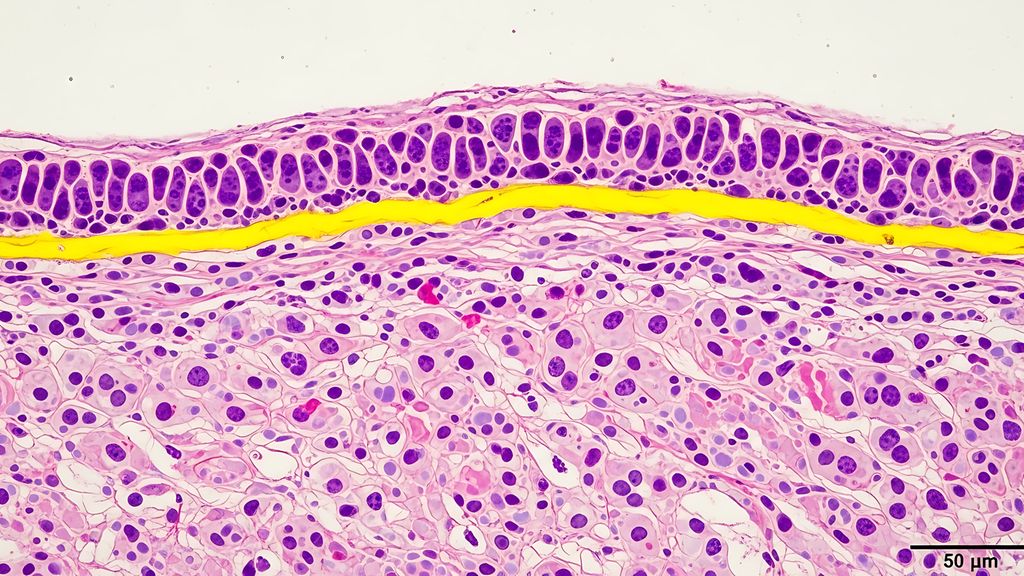
This study combines spatial transcriptomics and single-cell RNA sequencing to map the early cutaneous response to acute UVB irradiation in mice, with validation against human UV-exposed skin. Beyond confirming a robust keratinocyte stress response, it identifies endothelial cells as key coordinators of UV-induced inflammation. UVB triggered marked transcriptional remodeling in keratinocytes, fibroblasts and endothelial cells, activating AP-1, interferon, TNF, VEGF and complement pathways. Cell–cell communication analyses revealed a substantial increase in inflammatory signaling, with endothelial cells acting as central hubs that integrate signals from damaged epidermis and promote leukocyte recruitment. Cross-species conservation supports the relevance of these findings to human skin. Overall, the work shifts the paradigm from a keratinocyte-centric view of photodamage to a multicellular network in which endothelial cells play an important regulatory role.
Publication:
● An J et al.: Single-cell and spatial transcriptomics implicate vascular cell orchestration of inflammatory changes after UV light exposure in skin. J Investig Dermatol 2026; 146(7): 1989-2000
Unanchored by two hits: Interferon-γ and mechanical stress synergize to undermine melanocyte adhesion and promote vitiligo
This study identifies defective melanocyte adhesion to the basement membrane as a key mechanism linking inflammation and mechanical trauma in vitiligo. Using primary human melanocytes, ex vivo human skin and patient biopsies, the authors show that interferon-γ reduces the focal adhesion proteins FAK and integrin β1, weakening melanocyte attachment without directly inducing apoptosis. Mechanical stress amplifies this effect, providing a mechanistic explanation for the Koebner phenomenon. The study further implicates cathepsin L as a mediator of FAK degradation, as its inhibition restores focal adhesion and limits melanocyte detachment. Finally, the JAK1/2 inhibitor baricitinib suppresses this pathway by blocking IFN-γ signaling, preserving FAK and integrin β1 expression and improving melanocyte retention, highlighting adhesion preservation as a potential therapeutic strategy for vitiligo.
Publication:
● Lee EJ et al.: Unanchored by two hits: interferon-γ and mechanical stress synergize to undermine melanocyte adhesion and promote vitiligo. Bri J Dermatol 2026; 195, 109-21
Limits of AI in real-world skin cancer diagnosis
This prospective diagnostic study assessed whether contemporary artificial intelligence (AI) models can match physicians in realistic skin cancer diagnosis. Based on 1,117 clinically representative cases, including atypical and rare tumors, 652 physicians with varying dermoscopy experience were compared with a conventional convolutional neural network (CNN) and two PanDerm foundation models. The unimodal foundation model outperformed clinicians with less than three years of experience and matched those with intermediate expertise. However, dermatologists with more than ten years of experience achieved the highest diagnostic accuracy and sensitivity. Adding clinical photographs and metadata did not improve AI performance; the multimodal model performed worse than the unimodal version. Overall, the findings support AI as a decision-support tool, particularly for less experienced clinicians, while emphasizing the continued importance of expert clinical judgment.
Publication:
● Anriot et al.: Limits of artificial intelligence models for skin cancer diagnosis in realistic settings. JAMA Dermatol 2026; published online: June 3, 2026. doi: 10.1001/jamadermatol.2026.1492
Which of the statements listed here are correct?
A. According to the study, which signaling pathway showed the greatest increase in intercellular communi-cation following acute UVB exposure?
1. Wnt/β-catenin signaling
2. Notch signaling
3 Hedgehog signaling
4. VEGF signaling
B. Which mechanism best explains how interferon-γ and mechanical stress promote melanocyte loss in vitiligo according to this study?
1. They directly induce melanocyte apoptosis through activation of caspase-3.
2. They reduce focal adhesion by downregulating FAK and integrin β1, leading to melanocyte detachment from the basement membrane.
3. They increase type IV collagen degradation, causing complete basement membrane destruction.
4. They primarily stimulate MMP-9 production in melanocytes, leading to E-cadherin degradation.
C. According to this study, which statement best reflects the performance of current AI models for skin cancer diagnosis in realistic clinical settings?
1. The multimodal foundation model outperformed expert dermatologists by integrating clinical images and metadata.
2. The unimodal foundation model surpassed dermatologists with more than 10 years of dermoscopy experience.
3. The unimodal foundation model outperformed novice clinicians and matched intermediate-level readers but remained inferior to expert dermatologists.
4. The first-generation convolutional neural network consistently outper-formed physicians across all experience levels.
You can find the right answers below.
Auflösung: Die korrekten Antworten auf die Multiple-Choice-Fragen unseres Journal Club dieser Ausgabe lauten wie folgt: A 4, B 2, C 3
Das könnte Sie auch interessieren:
Alopecia areata: Induzierte Immunregulation lässt Haare wachsen
Unterschiedliche Biologika und Januskinase-Inhibitoren, die auch bei anderen Autoimmunerkrankungen der Haut zum Einsatz kommen, sind für Alopecia areata (AA) zugelassen oder werden in ...

Wie Inkretinmimetika (auch) auf die Haut wirken
Prof. Dr. med. Thomas Kündig, Zürich, berichtete in seinem Vortrag über die Wirkungen und Nebenwirkungen von Inkretinmimetika in der Dermatologie. Nach aktuellem Wissensstand sind diese ...
Die menschliche Haut in der modernen Kunst
Dr. Ralph Ubl, Professor für neuere Kunstgeschichte an der Universität Basel, stellte sich der schwierigen Herausforderung, einem Raum voller erwartungsvoller Dermatologen das Organ Haut ...