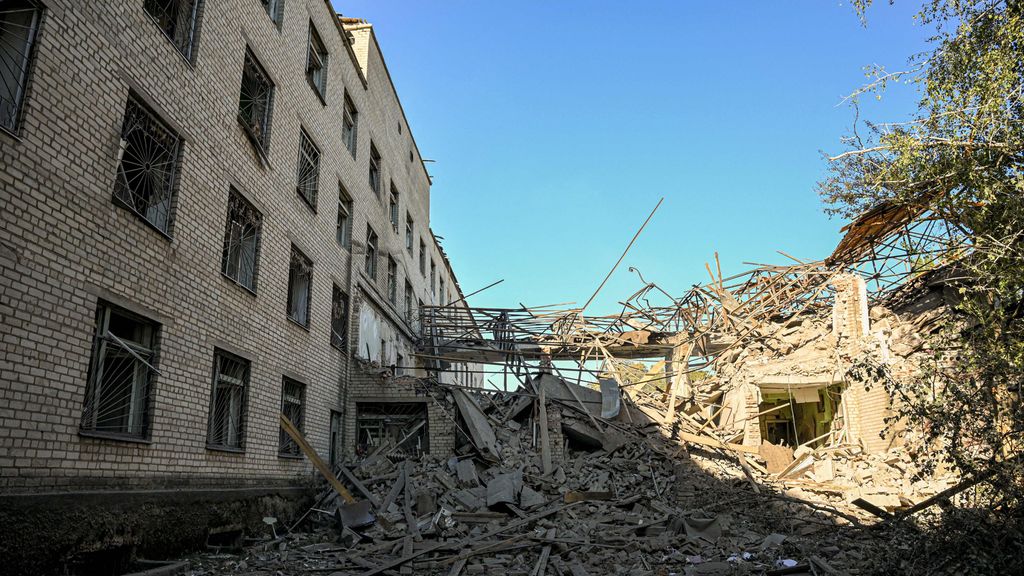
“Before the war, there were 61 psychiatric clinics – today, one in six has been destroyed”
War is raging all around, but she has to keep her department running. Prof. Dr med Irina Pinchuk heads the Institute of Psychiatry at the Taras Shevchenko National University of Kyiv. In a keynote speech at the SSPP (Swiss Society of Psychiatry and Psychotherapy) annual conference in Bern, she shocked the audience with her depictions of the external devastation of the country – and the internal devastation of her fellow citizens. A snapshot after 21 months of war.
Prof. Pinchuk, what is your memory of the outbreak of war on 24 February 2022?
I. Pinchuk: That day changed my life. I was woken up by a phone call because friends from the west of Ukraine wanted to know what was happening in Kyiv. Actually, 24 February should have been my last working day before my holiday. I had booked a flight to Frankfurt because my husband and I wanted to travel to see our daughter for the birth of our grandchild. We spent the day of our grandchild’s birth on 26 February in an air raid shelter, hoping that we would see him one day.
On the day the war broke out, 24 February, I was supposed to give a lecture for students. Instead, I took the decision together with colleagues from the Institute of Psychiatry to immediately revive the “Stop Panic” hotline – the initiative had already been successful during the Covid-19 pandemic. We shared our mobile phone numbers on social media and immediately received the first calls. The phone rang around the clock. I saw explosions and fires from the windows of my flat. I packed an emergency bag with documents, a laptop, water, bread and clothes. Then my husband and I took refuge in one of the bunkers, where we spent most of the first two weeks of the war.
Since then, 21 months have passed. What does a “normal” working day look like for you now?
I. Pinchuk: By and large, the working day is the same as before, but there are a few differences. Sometimes missile or drone attacks disrupt the daily routine. Lessons and meetings are then suspended. Overall, we work more flexibly now and switch between offline and online work depending on the situation.
Can you summarise the trauma the Ukrainians have experienced for us?
I. Pinchuk: Russia has now occupied 18 per cent of the territory of Ukraine. The ongoing fighting brings with it various traumatic factors. One of the most significant ones is the ongoing burden that the mass trauma of war places on people. We are constantly surrounded by traumatic information shared in the media and on social platforms. Added to this is the burden experienced on a personal level, as families have been torn apart, and the war has turned millions of people into internally displaced persons and refugees.
Can such experiences be expressed in figures?
I. Pinchuk: Of course, these are individual experiences, but a national survey in October 2022 showed that the war had already directly or indirectly affected over 32 million people at that time – that’s three quarters of our country’s population.
7.8 million families had to separate. 6.4 million families saw their place of residence occupied, 6 million lost savings or property, 5.3 million lost their homes and 1.1 million went hungry. Around 100,000 people were mourning deceased relatives or friends at that time. 20.8 million people had lost their income, and almost half of them had no access to essential goods.
As you would expect, this situation is also having an impact on mental health: According to the study, there has been a deterioration in the mental state of 15.6 million Ukrainian families. Today, these already dramatic figures are almost certainly even higher.
What is your assessment of the medical provision for people with psychiatric or mental health problems at present?
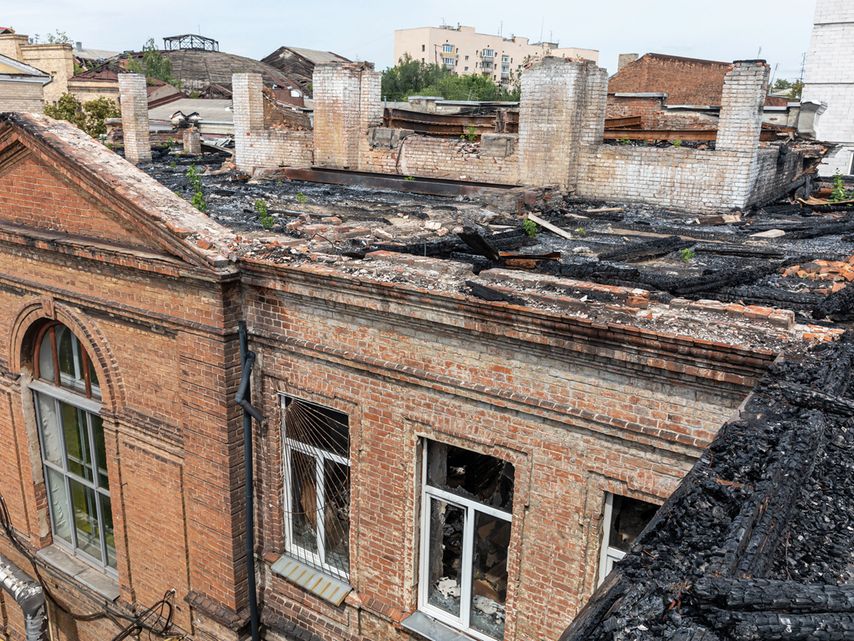
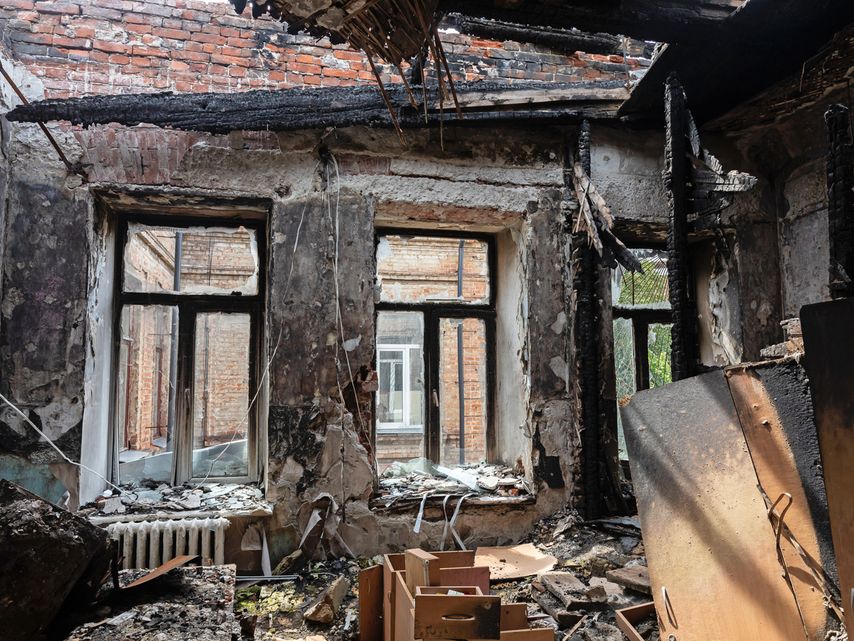
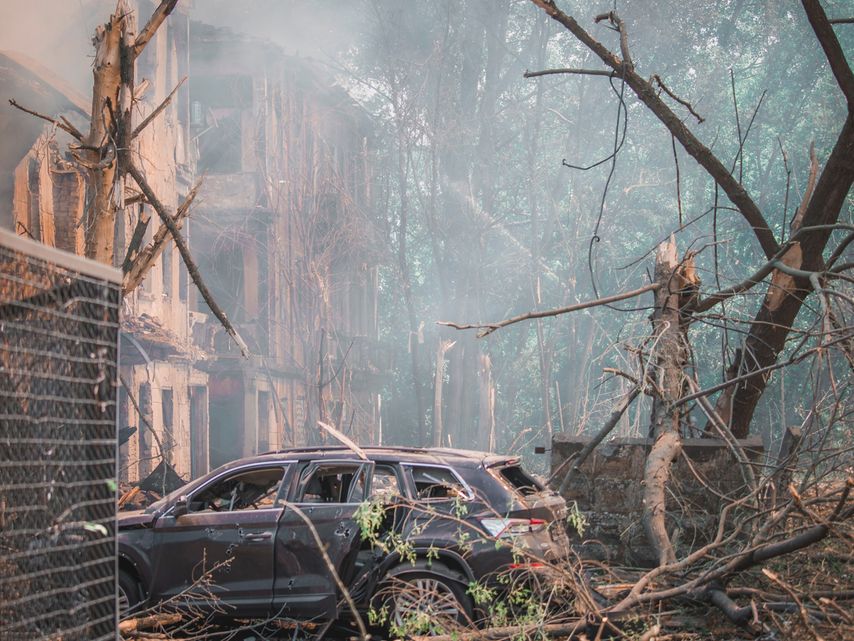
I. Pinchuk: Before the war, there were 61 psychiatric clinics in Ukraine – today, one in six has been destroyed, some of them beyond repair. Moreover, the structure of psychiatric services is suffering badly as a result of the fighting. There is a shortage of staff – and this at a time when we can attribute a large number of hospital admissions to war trauma.
You have published a study on the personnel situation. What were the results?
I. Pinchuk: We asked the managers of 32 inpatient psychiatric facilities to complete an online questionnaire covering the period from January to April 2022. At that time, the war had already driven one in ten people out of the medical field; half a per cent were injured. In one of the facilities, as many as 46 per cent of the medical staff were suffering from injuries. The staff shortage is exacerbated by the additional workload and the need to be able to evacuate patients and staff quickly. That is why the personnel issue was crucial from the outset of the war and remains so today.
What other concerns were there for healthcare provision as a result of the war?
I. Pinchuk:The topics change depending on the phase of the war. At the beginning of the war, the question of how closures would affect medical care was at the forefront. What if drug factories are destroyed or pharmacies run out of medicines? These points were discussed primarily at the start of the war. Discussions have now shifted, and the situation is very dynamic.
In what way?
I. Pinchuk: A year later, public attention focussed on the sudden changes in everyday life and life plans. The main topics now included injuries, illness and violence, including war-related sexual violence. People were suffering as a result of having to relocate and part withrelatives. Many Ukrainians had to deal with the loss of loved ones, their homes, their income or their place of education.
What is the situation today?
I. Pinchuk: We are currently having intensive discussions about how to deal with landmines. A third of Ukraine’s territory is now mined. We are also concerned with how and when prisoners of war can return and how we should deal with the economic damage. Many businesses have been destroyed, along with housing and infrastructure. In everyday life, this manifests as interruptions in supply chains, be it for food, water or medicines.
Many people have long since reached breaking point. What does that mean for you as a psychiatrist?
I. Pinchuk: According to the WHO, one in four Ukrainians is at risk of developing a mental disorder as a result of the conflict. A publication by Kyiv Medical University shows that the prevalence of post-traumatic stress disorder, PTSD for short, and depression is on the rise. This also increases the risk of mental health problems in children whose mothers suffer from PTSD. At the same time, drug use is increasing, as are somatic problems such as infections, allergies and cardiovascular problems.
The authors of the study believe that we psychiatrists and other specialised services will have to care for an additional 1 to 2 million people with moderate and severe mental disorders. They also expect an additional 2 to 3 million people suffering from mild mental disorders who also need psychological help. Overall, the group at risk of mental health problems is growing by 18 million people who need places in self-help groups or hotlines where they can get support.
These 18 million people include a wide variety of groups with their own needs. Are there already specific scientific studies?
I. Pinchuk: In my team, for example, we are working intensively on the structure of care for patients with a substance use disorder. We published a study on access to substitution therapies in August last year.
There are now also scientific publications on the mental health of people who have fled abroad. Buchcik et al.1 recently reported that refugee women in Germany are affected by significantly higher levels of psychological stress, depressive symptoms and anxiety.
Anxiety symptoms and depression are also common in the Ukrainian military, at over 40 per cent, and 12 per cent of soldiers suffer from insomnia. Interestingly, these symptoms are more pronounced in the territorial defence forces than in the regular army in active war zones.
In addition to these works, we can refer to earlier publications from the Donetsk region. These show, for example, that young people are at increased risk of developing PTSD, severe anxiety or depression.
Where can those who are interested find out more about the situation, especially with regard to psychiatric care?
I. Pinchuk: In two key articles that emerged from the ninth annual conference of the Ukrainian Psychiatric Association on 24 February 2023: “The Price of Peace in Our Time”, published in World Psychiatry2, and “Ukraine: resilience and reconstruction” in The Lancet Psychiatry3. In addition, a group of Commission members is currently working in Ukraine to prepare a report on mental health and the future of psychiatry in Ukraine. The results could be of strategic importance for us in creating a new model of psychiatric care based on evidence-based interventions and the protection of people’s rights.
What support would you like from Swiss doctors?
I. Pinchuk: The most important thing for us is not to be left alone. We have had a terrible but unique experience. You can help us disseminate what we learn from this experience around the world to improve psychiatric care in emergency situations.
Prof Pinchuk, what you are experiencing is unimaginable. Thank you for sharing your impressions with us. Finally, we would like to ask you what you are particularly grateful for in these difficult times.
I. Pinchuk:I am grateful for the fact that I am still alive and well. For my grandson, who I was able to visit for the first time two months after his birth. And, of course, for the mental strength and unity of the Ukrainian people during this dark time as well as the international support, without which we would no longer exist.
Thank you for the interview!
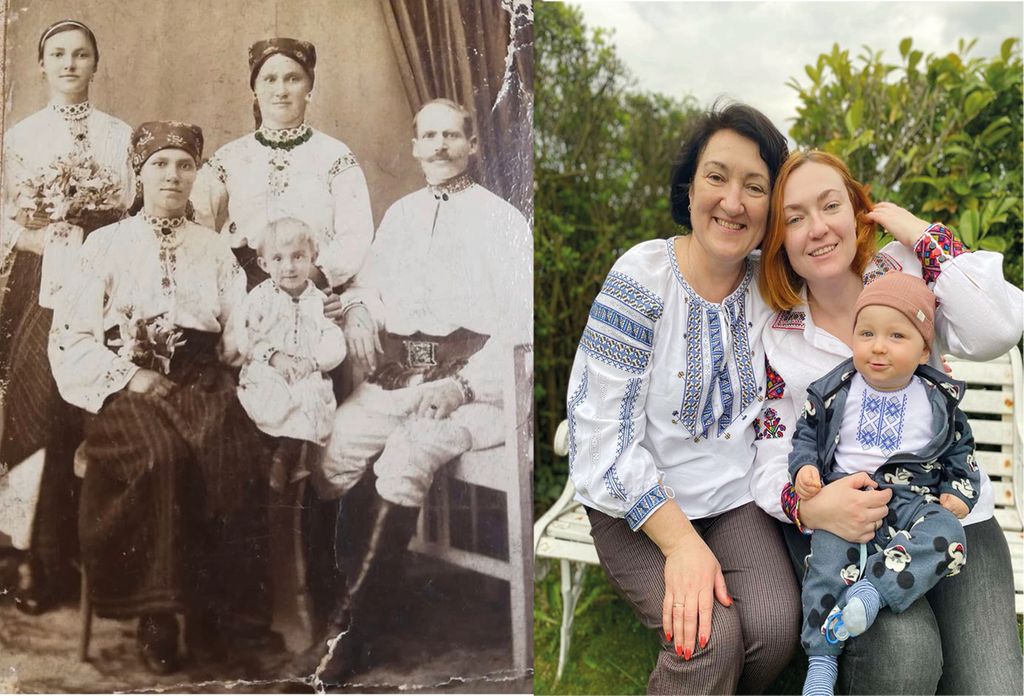
Our identity cannot be taken from us
“In Ukraine, we wear traditionally embroidered shirts. For us, they are not just clothes – they are our identity. These photos show six generations of my family wearing these shirts: my great-grandmother, my grandparents, my father, me, my daughter and my grandson. In Ukrainian embroidery, each colour has its own meaning: red symbolises love, joy and perseverance. Yellow stands for the sun, health and wealth and blue for water. For me, these photos are proof of the existence of Ukrainians. Our people are not an invention. We were, are and will continue to be.”
Source:
Interview based on a symposium at the SSPP Congress, 7–8 September 2023, Bern
Literature:
1 Buchcik J et al.: Mental health outcomes and quality of life of Ukrainian refugees in Germany. Health Qual Life Outcomes 2023; 21: 23 2 Pinchuk I et al.: The price of peace in our time. World Psychiatry 2023; 22: 337-8 3 The Lancet Psychiatry: Ukraine: resilience and reconstruction. Lancet Psychiatry 2023; 10: 305
Das könnte Sie auch interessieren:

Déclin cognitif subjectif: ce qu’il signifie et ce que nous devrions faire
Beaucoup de patient·es signalent tôt des modifications de la mémoire alors que leurs tests diagnostiques sont normaux. Ce stade, dit déclin cognitif subjectif (SCD, «subjective cognitive ...

Suivi de l’évolution du changement climatique et des maladies infectieuses émergentes
En raison du changement climatique, il a récemment été constaté une augmentation significative des maladies infectieuses émergentes en Europe. Il en résulte de nouveaux défis, tant au ...

«Les antibiotiques peuvent être évités dans la plupart des cas»
Les infections des voies urinaires (IU) constituent l’un des principaux facteurs favorisant le développement de la résistance aux antibiotiques. Même en cas de récidives des infections, ...